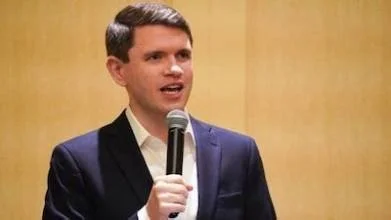
Hi, It's U. S Senate candidate James Talarico. Can you spare a dollar?

Do you know this man? He sure knows you.

For the past three months, U. S. Senate candidate from Texas, James Talarico, sent me messages every couple of days asking for a donation.

Then, he started asking me for a dollar every day, then asking again and again, with the requests sounding more like pleading and desperation.

“Please please, pretty please, send me a dollar.”

These one dollar requests started showing up twice a day as Election Day approached.

I blocked him.

The campaign’s tactics were typical of small-dollar fundraising, and I’m not in a position to judge how he or his team chose them. But the result is worth noticing. The messages felt less like an invitation than a plea, and by the fifth or sixth ask, the request was no longer about the candidate or his ideas. It was about the next click (sending more money). The fix isn’t silence. It’s making each appearance worth hearing on its own.

And now, some data.

There’s an old advertising saying that a message needs about eight hearings before it registers. Marketers still repeat it, but the research has moved past any single number. Depending on the audience, the medium being used, and how the repetition is spaced, the figure can run from three exposures to fifteen. (WARC summary as reported by Sky Media, 2025*).

The “eight hearings” adage holds a truth most artists miss: by the time you’re tired of hearing about your concert or new recording, your audience may only be just starting to notice it.

It can be challenging to convince an artist that two or three promotional messages won’t be enough to bring their project the attention it rightfully deserves.

So, the question isn’t whether to promote your work. It’s how to make promotion sound like programming rather than a plug. A March 15 concert doesn’t need a countdown of shameless plugs. It needs a conversation that starts in January, built around why the music matters, what the program is about, and what the audience will hear.

Your concert or new recording is a program, not a commercial break. Nobody focuses on the ad. They stay for the music because the host knows when to stop talking and start playing.

Be the host. And then call it a day.


*The WARC article is the source and the data figures are as “reported by Sky Media’s research team.” I couldn’t access the underlying data.

Magna, Roku, and Omnicom findings were also used as sources for the data mentioned in this essay.

David SrebnikComment